
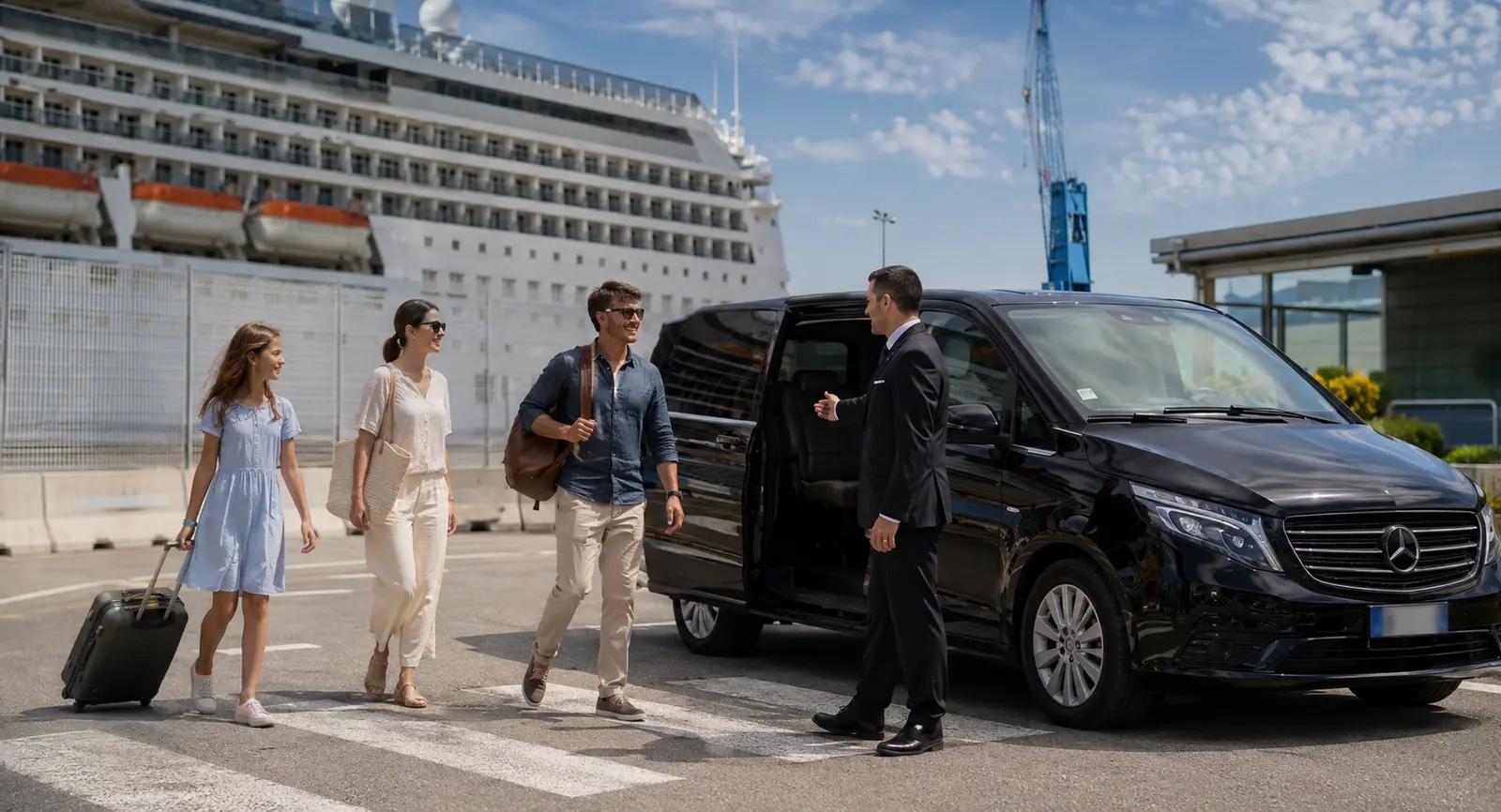
“Civitavecchia transportation” can mean a direct port transfer, a return-to-ship shore excursion, sightseeing before embarkation or a post-cruise journey to Rome or Fiumicino Airport. The ship’s schedule and the direction of travel determine the correct service.
The short answer
- Always send the ship name, sailing date and exact all-aboard time.
- The permitted meeting point is confirmed for the current terminal and port procedure.
- A Rome shore day must protect both road time and a conservative return margin.
- A flight after disembarkation requires its own check-in deadline and contingency time.
First choose the correct Civitavecchia service
Direct cruise-port transfer
A direct transfer connects the permitted Civitavecchia meeting point with a Rome hotel, Fiumicino Airport, another address or a different Italian destination. The quotation covers transportation rather than sightseeing time unless a stop or visit is expressly included.
Rome shore excursion
A shore excursion starts and finishes at the ship. A private Rome program commonly uses a service window of up to nine hours, with conservative planning for the journey in both directions. The available sightseeing time depends on disembarkation, traffic, walking, the selected stops and the ship’s return deadline.
Pre-cruise or post-cruise sightseeing
These services combine a focused Rome experience with the separate transfer to or from Civitavecchia. Luggage stays in the confirmed vehicle, subject to capacity. The route must still prioritize embarkation or a later flight rather than an ambitious list of landmarks.
The all-aboard time controls a shore day
The all-aboard time is more important than the published departure time. It is the deadline by which passengers must be back on board, and it should be supplied before the itinerary is confirmed. A preferred earlier return—for example, to meet companions or avoid a rushed reboarding—should also be stated.
For Rome planning, allowing approximately 90 minutes in each direction is a conservative starting point rather than a promise of journey time. Traffic, port procedure, road conditions and events can change the day. The chauffeur protects an agreed return margin and may shorten or omit sightseeing if conditions make the original sequence unsafe.
A return-to-ship service is not designed by counting how many attractions fit on a map. It is built backwards from the protected port arrival. This is why a chauffeur may recommend exterior views, a smaller number of central stops or one carefully timed interior rather than several ticketed visits.
Where a private chauffeur meets cruise guests
The permitted meeting point depends on the ship, terminal and current port procedure. Pickup directly beside the vessel must never be assumed unless it has been specifically authorized and confirmed. Some arrivals use a designated vehicle area or the cruise shuttle system before meeting the chauffeur.
The final instructions should include the chauffeur or operations contact, the sign name and the point where passengers should wait. Guests should keep their telephone available after leaving the ship and avoid accepting directions from unrelated transport sellers.
Flights after a cruise need a separate timing decision
Disembarkation time is not the same as a guaranteed vehicle departure. Baggage release, border procedures, walking and the assigned meeting point all take time. A post-cruise transfer to FCO should therefore be planned from the airline’s check-in and bag-drop requirements, with a margin for road disruption.
If the flight is too early for a responsible private transfer, the correct answer is to change the travel plan—not to promise an impossible driving time. Send the airport, airline, flight number and departure time before booking so feasibility can be confirmed in writing.
Passenger and luggage totals determine the vehicle
Every suitcase, cabin bag, stroller and mobility item matters. A vehicle category suitable for six passengers without luggage may not be suitable for the same six passengers leaving a cruise with large cases. When one vehicle cannot safely carry the complete party, two suitable chauffeur-driven vehicles may be proposed after checking every passenger and bag. Roma Limo Services does not offer buses or coaches as part of its service model.
Civitavecchia planning checklist
- Ship name, sailing date and terminal information when available
- Disembarkation or requested pickup time
- Exact all-aboard time for a return-to-ship service
- Total passengers and a realistic luggage count
- Rome hotel, airport, ship or final destination
- Flight details and check-in deadline when relevant
- Requested sightseeing priorities and any timed tickets
Compare the Civitavecchia transfer options, review the private Rome shore excursion or request a written operating plan.